
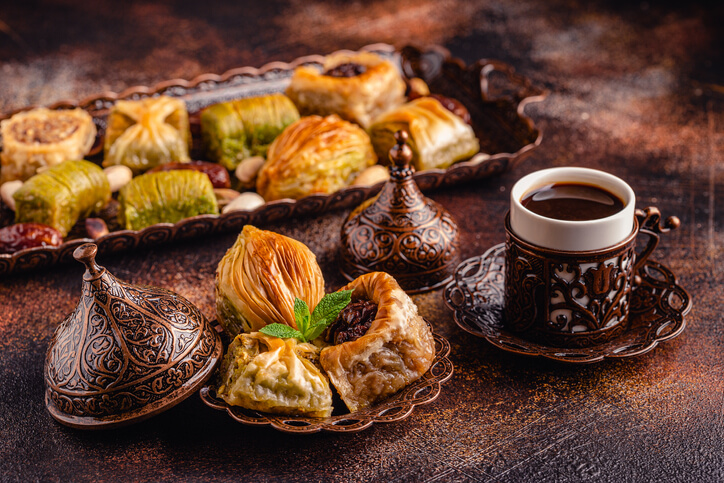
Introduction to Turkish Dessert Culture
Turkish desserts are a living testament to the country’s rich culinary heritage and diverse cultural influences. Rooted in centuries of tradition, these desserts embody the flavors of the Ottoman Empire, blending sweetness with a medley of nuts, fruits, and spices. From celebratory feasts to everyday treats, Turkish desserts hold a cherished place at the heart of the country’s gastronomic identity. They are more than just food; they represent warmth, hospitality, and the essence of Turkish culture.
Baklava
Arguably the most famous Turkish dessert worldwide, baklava is a symphony of flaky pastry, finely chopped nuts, and syrupy sweetness. This decadent dessert dates back to the Ottoman Empire, where it adorned the tables of sultans and dignitaries. Layers of thin phyllo dough are meticulously stacked, interspersed with crushed pistachios, walnuts, or hazelnuts, and then drenched in syrup or honey. Variations like pistachio baklava from Gaziantep further highlight regional twists across Turkey. Every buttery, crisp bite offers a piece of history.
Lokum (Turkish Delight)
Turkish delight, known as lokum, is a chewy, sugary treat that has enchanted palates for centuries. Available in a variety of flavors such as rose, lemon, and pomegranate, it often contains nut fillings like pistachios or hazelnuts. Lokum’s origins date back to the Ottoman era when it was famously gifted to visiting dignitaries. Whether enjoyed on its own or as an accompaniment to Turkish coffee, lokum is a small yet significant piece of Turkish tradition, evoking delight in every cube.
Künefe
Künefe is a rich dessert that epitomizes indulgence. Made from thin layers of shredded pastry called kadayıf, this dessert is filled with soft, unsalted cheese and baked to perfection. It’s then soaked in sweet syrup and often garnished with crushed pistachios. Hailing from southern Turkey, künefe is beloved for its perfect balance of crisp pastry and gooey, melted cheese. Best served hot, this dessert is an unforgettable explosion of textures and flavors.
Sütlaç (Rice Pudding)
Sütlaç, or Turkish rice pudding, is a comforting and timeless dessert. Made by simmering rice with milk and sugar, it boasts a creamy, silky texture that has won the hearts of generations. Baking sütlaç in clay pots enhances its flavor, as does adorning the pudding with cinnamon or crushed hazelnuts. Simple yet utterly satisfying, sütlaç is cherished as a lighter dessert perfect for any occasion.
Kazandibi
Kazandibi is a caramelized milk pudding with a distinct burnt surface, giving it both a unique taste and texture. Often described as the Turkish crème brûlée, it’s made by slightly charring the bottom layer of pudding to create a thin caramelized crust. This dessert’s smoky, toasty flavor contrasts beautifully with its creamy consistency, making it as visually appealing as it is delicious.
Aşure (Noah’s Pudding)
Considered one of the oldest Turkish desserts, aşure holds special cultural and religious significance. Also known as Noah’s Pudding, it’s traditionally believed to have been prepared on Noah’s Ark using the last remaining ingredients. Aşure combines grains, legumes, dried fruits, nuts, and spices in a wholesome, hearty pudding. Loved not just for its unique taste but also its symbolism of unity and sharing, aşure is a dessert that brings communities together.
Kabak Tatlısı (Pumpkin Dessert)
Kabak tatlısı turns simple pumpkin slices into a decadent dessert. The pumpkin pieces are slow-cooked with sugar until tender and slightly caramelized. Topped with tahini, crushed walnuts, or clotted cream, this dish transforms humble ingredients into a gourmet delight. Kabak tatlısı is a testament to the Turkish ability to elevate seasonal produce with minimal yet impactful preparation.
Tavuk Göğsü (Chicken Breast Pudding)
Tavuk göğsü is one of the most unique desserts you’ll encounter in Turkey. Traditionally made with finely shredded chicken breast blended into a creamy milk pudding, this dessert surprises with its smooth texture and subtly sweet flavor. Despite its unconventional ingredient, tavuk göğsü has been an Ottoman delicacy for centuries and remains a testament to Turkey’s innovative culinary traditions.
İrmik Helvası (Semolina Halva)
A staple dessert for celebrations and special occasions, irmik helvası is a warm, nutty, and comforting dish. Made by toasting semolina in butter before adding sugar syrup and milk, this dessert achieves a soft, crumbly texture that melts in your mouth. Variants might include pine nuts or almonds, and it’s commonly served with a dollop of ice cream for added indulgence. İrmik helvası is not just a treat but also a celebration of tradition and togetherness.
Nutritional Information Chart
Here’s a quick look at the approximate calorie counts and nutritional details of these Turkish delicacies:
|
Dessert |
Calories (per serving) |
Key Ingredients |
|---|---|---|
|
Baklava |
200-300 |
Phyllo dough, nuts, syrup |
|
Lokum (Turkish Delight) |
150-250 |
Sugar, starch, flavorings |
|
Künefe |
350-400 |
Kadayıf, cheese, syrup |
|
Sütlaç (Rice Pudding) |
150-200 |
Rice, milk, sugar |
|
Kazandibi |
170-220 |
Milk, sugar, caramelized crust |
|
Aşure |
350-400 |
Grains, fruits, nuts, spices |
|
Kabak Tatlısı |
200-250 |
Pumpkin, sugar, walnuts/tahini |
|
Tavuk Göğsü |
150-200 |
Milk, sugar, chicken breast |
|
İrmik Helvası |
200-250 |
Semolina, butter, sugar syrup |
Savor the Sweetness of Turkish Desserts
Turkish desserts are a vivid reflection of the country’s history, culture, and passion for food. From the syrupy richness of baklava to the comforting simplicity of sütlaç, each dessert offers its own unique story and flavor. Whether you’re savoring these treats during a festive celebration or as a simple indulgence at home, Turkish desserts promise an unforgettable experience. Embark on this flavorful adventure and immerse yourself in the sweetness of Turkish culinary traditions.


