
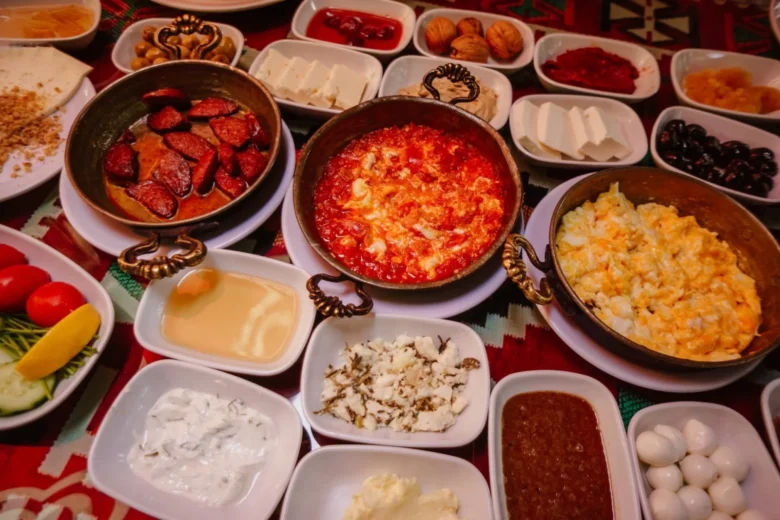
Turkish breakfast differs significantly from American brunch in that it’s more of a cultural ritual, complete with delectable menemen (meatballs) and homemade jams, not to mention steaming Turkish tea.
Cheeses are an integral component of this feast and there’s a wide array of varieties to try, from beyaz peynir and tulum to Van herbed cheese (Van otlu peynir). Typically a variety is provided.
Menemen
Menemen is a classic traditional Turkish dish consisting of eggs combined with fresh tomato and pepper sauce, similar to Libyan shakshuka but featuring optional onions as well as more subdued seasoning such as only adding red pepper flakes for color.
Menemen is similar to scrambled eggs; to prepare it, simply saute a combination of tomatoes and green peppers before stirring in beaten eggs and mixing well. Some add sucuk, a spicy dry Turkish sausage for additional flavor but this step is not essential.
This easy breakfast dish makes an enjoyable morning start, requiring just three ingredients and taking less than 30 minutes to prepare.
Tip for crafting the perfect Menemen: Use high-quality ingredients like Turkish-branded oil and butter, freshly-pressed lemon juice and grated Kasar (a type of melting cheese similar to mozzarella) at the end of cooking; just be sure to mix it into the eggs so it melts completely! Finally, some people like to spice things up by adding red pepper flakes for an added spicy kick!
Cilbir
Breakfast in Turkey is all about taking the time to appreciate its many delectable dishes, ranging from savory to sweet options and everything in between. You will surely find something perfect!
My go-to Turkish breakfast dish is Cilbir: perfectly poached eggs nestled in creamy yogurt sauce drizzled with chili butter – making for an irresistibly tasty combination that is satisfying whether enjoyed solo or with bread such as simit, pide or lavash.
Cilbir is an example of how Turkish cuisine brings Middle-Eastern and Mediterranean influences together to produce something truly tasty and distinctive. If you’re searching for something lighter and healthier than what can often be found at breakfast time in Western countries, give Cilbir a try – you won’t be disappointed!
Try some traditional Turkish cheeses like beyaz penir (white cheese similar to Greek feta) and kasar, a firm light yellow cheese, as well as sampling some of their famous honey; it’s one of the finest honey products around! And don’t forget about sampling their famous honey production; its honey is considered among the world’s best!
At the end of my Turkish breakfasts, I like to add simit or pide as the perfect finishing touch – those delicious sesame seed-coated doughy rings you find everywhere in Turkey from streets corners and subway stations alike. They make for the ideal canvas to showcase any variety of Turkish cheese and jam you may desire, such as Van herbed cheese (Van otlu peynir), which has its roots in Van in eastern Turkey and boasts a distinctively tart flavor.
Simit
Simit is an integral component of Turkish breakfasts. A twisted ring of sesame-crusted bread that resembles something between a homemade bagel and soft pretzel, Simit boasts both crunchiness on the outside and softness within, similar to its counterpart but without boiling prior to baking – something you’ll find at nearly every Turkish restaurant and home in Turkey.
Simit is a delicious dough made of wheat flour, water, yeast, salt and roasted sesame seeds baked until golden brown before being coated with sesame seed powder for rolling and serving with various spreads or toppings. In Kayseri province in central Anatolian Turkey it can be served topped with ground fenugreek paste for an irresistibly smoky taste; Adana and Mersin variants often come stuffed with cheese or minced meat while in Alacati it’s popularly enjoyed spread with both lor curd cheese and mulberry jam for sweet-salty sensational flavorings that will satisfy cravings for sure!
Eggs are a traditional part of Turkish breakfast table. From being boiled, fried or scrambled – and often served alongside sucuk (Turkish sausage) – eggs can also be found alongside black and green olives as well as various cheese varieties like stringy dil peyniri to stringy cecil tulum and even feta. Plus fresh vegetables including tomatoes and cucumbers (often Cengelkoy variety).
Pisi
Turkish cuisine is well-recognized around the globe for its blend of European, Middle Eastern, and Central Asian traditions. While Western breakfasts might consist of quickly grabbing cereal or toast with coffee as they rush off to work or school, Turks take time out each morning to sit down for an extensive traditional Turkish feast for breakfast – and this may even take on buffet proportions on weekends or holidays with special dishes brought out as extra dishes and items are brought out.
Serpme kahvalti meals feature eggs in various forms: menemen (Turkish breakfast scrambled eggs with chilli flakes, tomatoes and green peppers), sahanda yumurta (fried eggs) or even hard-boiled or omelets. A range of cheeses such as Lor Peyniri/ezine cheese or Van Herbed from Turkey’s eastern region also make an appearance at every serpme kahvalti table.
Simit is a gorgeous ring-shaped bread covered with sesame or nigella seeds, ideal for breakfast as an easy breakfast snack or for pairing with breakfast foods like feta cheese, olives and cured meats. Pastirma is another favorite that features coarsely ground cornmeal combined with trabzon and kashar cheeses which may be seasoned with fenugreek powder (known in Turkish as samen) to create an irresistibly tasty meal – often served in flatbread such as either pita-style pitas or Turkish versions of quesadillas known as peynirli sikmas!


