
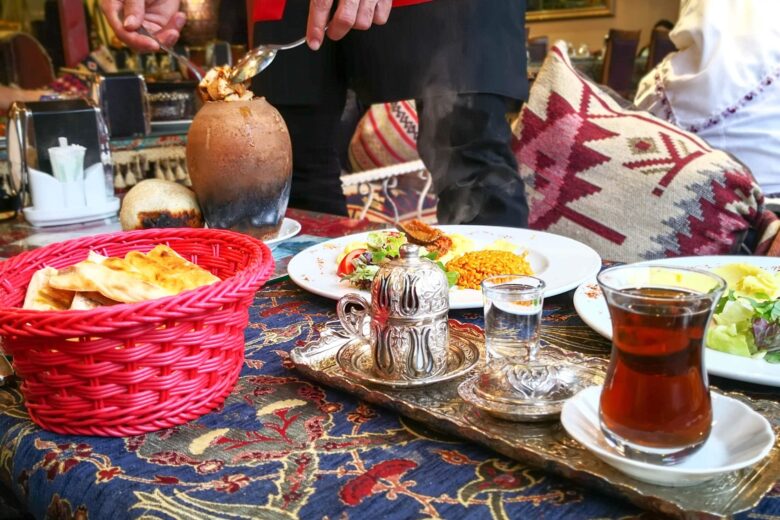
Turkey boasts an enticing food culture, reflecting its diverse regions. Traditional Turkish meals may include soup, hearty stews and grilled meat dishes.
Mealtime in Turkey is an integral component of society and this article gives a glimpse of what a typical day of eating in Turkey looks like.
Breakfast
On a typical weekday or weekend morning, Turkish breakfasts are leisurely affairs that should be enjoyed and shared among family members. A table is set with fresh food being presented while Turkish tea (cay) is being served alongside.
Breakfast typically includes freshly baked bread, cheese and olives – each country in Turkey boasts its own variety of cheese such as feta, kasseri and lor (similar to ricotta). Black and green olives are commonly served along with jams such as apricot, strawberry and fig jams for extra taste and variety.
Breakfasts typically feature fresh and dried fruit, nuts and a dip/spread made of tahini, pekmez (grape molasses), kaymak (similar to clotted cream), parsley and dill as ingredients. Yumurtali ekmek, pide and borek (twist-shaped pastries filled with spinach and cheese) may also appear on the table.
On weekends, more elaborate buffet-style breakfasts are often served. Menemen – a hearty stew made of ground beef mixed with onions and bell peppers – is popular, while fried eggs on top of sukuk (air-dried, spiced cured beef sausage) is another favorite dish. Additionally, many baked goods such as sumit, boyoz and gozleme may also make appearances at these breakfast tables.
Lunch
Lunch for any Turkish person means an abundant selection of regional delights. Their choices will depend on whether or not they need an energy boost, something filling, or both; either way a good way to start would be with meze of cold dishes and salads, such as creamy hummus and creamy kisir salad, which includes chopped bulgur wheat with pomegranate molasses, tomatoes, parsley onions peppers mint drizzled with lemon.
After ordering, one could either select from an array of lamb, chicken or fish dishes served with rice and vegetables or order the Turkish versions of kebab such as kofte or lahmacun kebabs accompanied by salads and yogurt for dessert. Vegetable dishes are also very popular and often include ingredients like string beans, carrots, zucchini artichokes eggplant green red peppers cabbage. These vegetable dishes are known as “zeytinyagli yemeklers” and can be served before or after the main course meal.
At lunchtime, other savoury dough-based specialities are also highly popular, including sigara boregi (phyllo pastry filled with cheese, feta, or minced meat and spinach); and tepsi borek, which comes in numerous varieties baked on a tray. As a final course, kahve (an herbal coffee drink) or Raki might be enjoyed as the perfect end to any meal.
Dinner
Turkish evening meals are lavish affairs, often resembling banquets. Since most family members come together during this mealtime, it offers everyone a unique opportunity to sample sumptuous dishes together.
Start off your meal right with some meze (appetizers), such as sucuk (a spicy Turkish sausage made of either beef or lamb and seasoned with garlic and spices), pastirma (air-dried cured beef flavored with herbs and spices), or yemek (crushed wheat flatbread served with cheese dip made up of tomato paste, tomato molasses and mint).
As for main dishes, try serving fish such as grilled balik if you are near the coast; while inland dishes such as Zeytinyaglilar (vegetables with string beans, leeks and spinach cooked in olive oil) are very popular throughout Turkey.
Turkey boasts an extensive variety of both savory and sweet dough-based pastries, from simit – a round sesame bagel – and borek, filled with cheese, spinach, minced meat or other fillings.
Don’t miss the unforgettable Turkish delight, an irresistibly soft cube-based dessert flavoured with everything from rose water to mint. Other treats to look for when visiting Turkey for dessert include badem ezmesi – the Turkish equivalent of marzipan – and dondurma (hard ice cream made of salep powder or corn starch with rose water added as an ingredient), raisins and dried figs as well as kaymak (clotted cream-butter) served alongside desserts to balance their sweetness.
Snacks
Home-cooked meals remain popular across Turkey’s diverse cultural landscape, where traditions vary greatly between regions and recipes vary across Turkey based on cultural traditions such as its Black Sea region’s special dishes like “cilbir”, a poached egg dish with yogurt, herb butter, and chili flakes.
Breakfast in Turkey is a large part of life and should include both sweet and savoury dishes, including delicious cheeses such as beyaz peynir, kasar and tulum as well as traditional Turkish-style spreads such as kaymak (made with finely chopped olives, lemon juice and olive oil).
Turkish snacks that satisfy cravings include sucuk – a spicy version of classical sausage made from beef meat mixed with various spices; pastirma is air-dried cured beef usually seasoned with garlic and herbs; while cig kofte is an irresistibly succulent delicacy comprised of ground and boiled meat mixed with finely cut onions, tomatoes and spices wrapped in durum dough before being sprinkled with lemon juice to complete this tasty experience.
Borek, Turkey’s signature dish, will bring back memories of meals prepared by their mothers – with fillings that range from cheese and spinach to minced meat – when eaten fresh from the oven. Delicious tea- or coffee-soaked circular pastry bites often served up on-the-go for snacking pleasure on-the-go! Additionally, street food is very popular here with leblebi: roasted chickpeas seasoned with salt and pepper being an absolute must try!


